

A Guide to Chainsaw Maintenance and Cross-Cutting Training
Introduction to Our Arboriculture Training Guide Series
Tree work and arboriculture require a wide range of practical skills, technical knowledge, and a strong awareness of safety. For those starting out in the industry, understanding which arboriculture training courses are required — and how different qualifications fit together — can sometimes be difficult. Many people begin their journey into arboriculture through chainsaw training, which forms the foundation for further qualifications.
This article forms part of a series of practical guides to arboriculture training, designed to explain the purpose of common courses within the industry. Each guide looks at what the training typically covers, how it fits within a career in tree work, and how it relates to other qualifications.

Across the UK arboricultural industry, practical competence is commonly demonstrated through independent assessment leading to industry-recognised qualifications. These qualifications are awarded by recognised organisations such as City & Guilds NPTC and Lantra, both of which assess practical skills against industry standards. This series aims to provide a clear overview of the training that helps candidates prepare for these types of assessments.
The first guide in this series focuses on Chainsaw Maintenance and Cross-Cutting training, which is widely considered a starting point for many people entering professional tree work.
What Is Chainsaw Maintenance and Cross-Cutting Training in Arboriculture?
Chainsaw Maintenance and Cross-Cutting training introduces the safe use of a chainsaw for ground-based operations. It focuses on the fundamental knowledge and practical techniques required to operate a chainsaw safely and efficiently.
Within arboriculture, chainsaws are one of the most commonly used tools, and safe operation is essential. Training in chainsaw maintenance and cross-cutting helps develop an understanding of the equipment, safe working practices, and correct cutting techniques.
Many arborists begin their practical training with this course before progressing to additional qualifications relating to tree felling, climbing, and aerial tree work.
Why Chainsaw Training Is Important
Chainsaws are powerful pieces of equipment that require appropriate training before they are used in a professional setting.
UK health and safety legislation requires that individuals using work equipment are properly trained and competent. Within the arboricultural industry, employers and contractors often expect operatives to demonstrate this competence through recognised qualifications.
Training helps candidates develop a clear understanding of:
Safe chainsaw operation
Equipment maintenance
Risk awareness
Safe cutting techniques
These skills form the foundation for many other arboricultural tasks.
What Will You Learn During Chainsaw Maintenance and Cross-Cutting Training?
Training courses are designed to introduce candidates to the knowledge and practical skills required for safe chainsaw use during ground-based operations.

During the course, candidates may learn how to:
Identify the main components and safety features of a chainsaw
Carry out routine maintenance and chain sharpening
Inspect a chainsaw before use
Start and handle a chainsaw safely
Cross-cut timber safely and efficiently
Understand basic risk assessment and safe working practices
The aim of the training is to build familiarity with the equipment and develop safe working habits from the outset.
Training and Independent Assessment
Training provides an opportunity to practise practical skills under the guidance of an instructor and become familiar with safe systems of work.
In many cases, training may be followed by an independent assessment conducted by City & Guilds NPTC assessor. This assessment evaluates whether a candidate meets the required standard of practical competence.
Because the assessment is independent of the training, successful completion of training does not automatically result in qualification. Candidates must demonstrate their competence during the assessment process.
How This Course Fits Into an Arboriculture Career
Chainsaw Maintenance and Cross-Cutting training is often considered an entry point into arboricultural training.
Many individuals complete this course before progressing to further training such as:
Felling and processing small trees
Tree climbing and aerial rescue
Using a chainsaw from a rope and harness
Developing competence in chainsaw operation is an important step for anyone planning to work professionally in tree care.
Progression to Other Arboriculture Qualifications
Once candidates have developed their chainsaw skills, they may choose to continue building their knowledge through additional training.
Common progression routes may include:
Felling and Processing Small Trees
This training focuses on safely felling small diameter trees and processing timber on the ground.
Tree Climbing and Aerial Rescue
For those wishing to carry out aerial tree work, training in climbing systems and emergency rescue procedures is essential.
Using a Chainsaw from a Rope and Harness
After developing climbing and felling skills, arborists may progress to using chainsaws while positioned within the tree canopy.
These qualifications build on the fundamental skills developed during initial chainsaw training.
Who Is This Course Suitable For?
Chainsaw Maintenance and Cross-Cutting training is suitable for a range of people interested in developing arboricultural skills.
This may include:
Individuals starting a career in arboriculture
Grounds staff working within tree teams
Forestry workers
Land management professionals
Those wishing to develop practical chainsaw skills
Previous experience with chainsaws is not always required, although a basic understanding of outdoor working environments can be beneficial.
Frequently Asked Questions About Chainsaw Training
Do you need chainsaw training to work in arboriculture?
Many employers and contractors expect individuals using chainsaws professionally to demonstrate appropriate training and competence. Within the industry, this competence is commonly demonstrated through independent assessment and qualifications awarded by City & Guilds NPTC.
How long does chainsaw training take?
Training courses can vary depending on the provider and the experience level of the candidates. Introductory chainsaw training often takes place over several days, allowing time to develop practical skills and prepare for independent assessment.
Is Chainsaw Maintenance and Cross-Cutting a beginner course?
This training is widely considered a starting point for those entering arboriculture. It introduces the fundamental skills required to operate a chainsaw safely during ground-based operations.
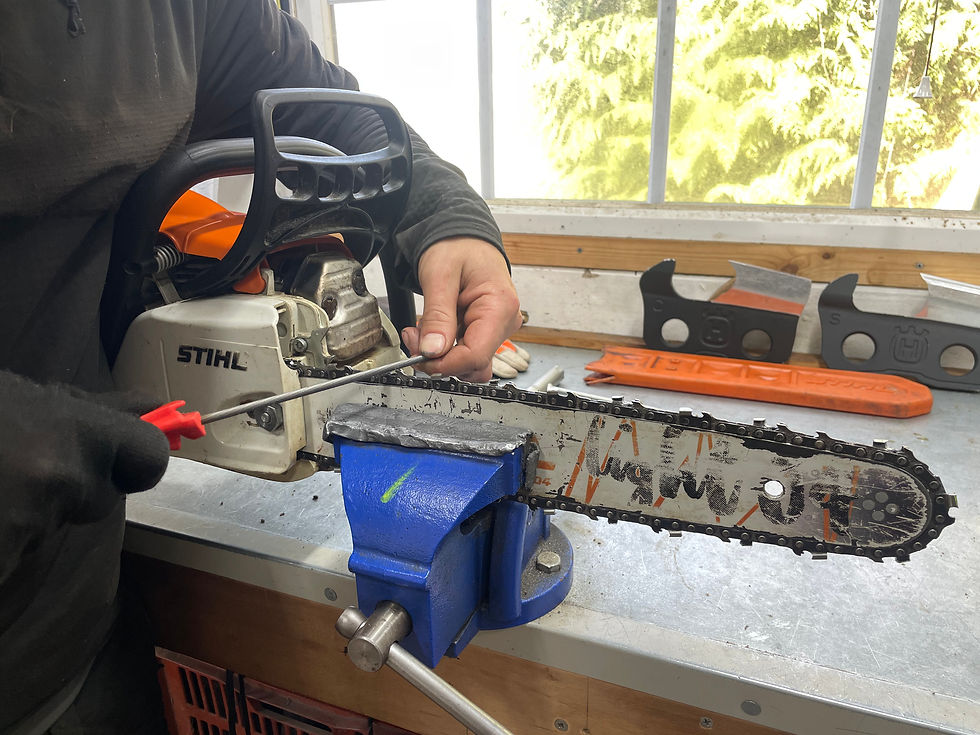
What equipment is used during chainsaw training?
Training courses typically involve the use of professional chainsaws and personal protective equipment such as helmets with ear and eye protection, chainsaw trousers, gloves, and chainsaw footwear. Candidates are introduced to the correct use and inspection of this
equipment as part of the training.
Part of a Series: Arboriculture Training Guides
This article is part of a series of guides exploring common training courses within the arboricultural industry.
Future articles in this series will cover topics such as:
Progression routes within arboriculture training
These guides aim to provide practical information to help individuals understand how different courses fit within a career in tree work.
Interested in Arboricultural Training?
If you are considering developing practical arboricultural skills, structured training can provide a useful starting point. Training courses allow candidates to build familiarity with equipment, practise safe working techniques, and prepare for independent assessment.
At Practical Arb, our courses are designed to support candidates working towards industry-recognised qualifications assessed by City & Guilds NPTC.
If you would like to learn more about upcoming training opportunities, you can view details of our available courses here:


Comments